


Thinking About Studying in Thailand? Start With Your Budget.
If you're thinking about studying in Thailand, one of the first questions that probably comes to mind is:
“How much money will I actually need?”
I had the same question when I first came to Thailand for my studies.
I completed my Master's degree at a public university in Thailand, so I experienced student life here not just as someone researching it, but as a student myself. From tuition fees and accommodation to food, transportation and those little expenses that somehow add up every month, I learned that the cost of studying in Thailand depends a lot on how and where you live.
The good news is that Thailand can be a relatively affordable study destination compared with many other countries.
But affordable doesn't mean you should arrive without a budget.
Here's what you should realistically consider before making your decision.
At a Glance: How Much Does It Cost?
Before going into the details, here's a quick overview.
| Expense | Estimated Cost |
|---|---|
| Tuition | THB 80,000–400,000+ per year |
| Accommodation | THB 5,000–15,000+ per month |
| Food | THB 4,000–8,000 per month |
| Transportation | THB 1,000–3,000 per month |
| Phone & Internet | THB 500–1,000 per month |
| Personal expenses | THB 2,000–5,000+ per month |
Important: These are general estimates. Your actual costs will depend on your university, program, location and lifestyle.
My Experience Studying in Thailand
A little from my own experience
I completed my Master's degree at a public university in Thailand, so I understand what it's like to manage university expenses while also paying for everyday life here.
One thing I learned quite quickly is that your lifestyle can make a bigger difference than you might expect.
You don't necessarily need to spend a lot to enjoy living in Thailand. Local food, public transportation and choosing accommodation carefully can help keep your monthly expenses manageable.
At the same time, I wouldn't recommend planning the absolute cheapest budget possible. Give yourself some extra money for unexpected expenses, social activities and simply enjoying your time in Thailand.
How Much Is University Tuition in Thailand?
There isn't one standard tuition fee for international students in Thailand.
The cost depends on the university, degree level and program.
As a general guide:
| Study Level | Approximate Tuition |
| Bachelor's | THB 80,000–300,000+ per year |
| Master's | THB 100,000–400,000+ |
| MBA / Business | THB 150,000–500,000+ |
| Specialized programs | THB 150,000–600,000+ |
These numbers are only a starting point. Some programs can be significantly more expensive.
When comparing universities, don't look only at the number advertised as “tuition.”
Check whether you also need to pay:
- Application fees
- Registration fees
- Student fees
- Laboratory fees
- Examination fees
- Books and materials
- Graduation-related fees
Some universities charge by semester, while others calculate tuition based on credits.
Always ask for the full fee structure before making your final decision.
Public vs. Private Universities
Thailand has both public and private universities, and both can be good choices depending on what you're looking for.
Public Universities
Public universities can be attractive for students who are looking for:
- More affordable tuition options
- Established academic institutions
- A traditional university environment
- A wide range of programs
I personally studied my Master's at a public university in Thailand, and one thing I appreciated was being able to experience a university environment alongside both Thai and international students.
Private Universities
Private universities may offer:
- More international programs
- English-taught degrees
- Flexible admission options
- Modern facilities
- Programs designed specifically for international students
Rather than asking “Which one is cheaper?”, I recommend asking:
“Which university gives me the best value for my goals and budget?”
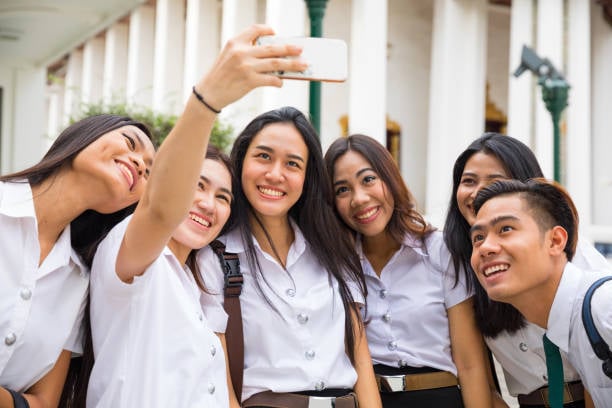
Thailand offers a growing range of programs for students looking for an international study experience.
What About Living Costs?
This is where things become more personal.
Two students studying at the same university can have completely different monthly budgets.
One might spend THB 15,000 a month, while another spends THB 30,000 or more.
Why?
Because of accommodation, eating habits, transportation, shopping, entertainment and how often they go out.
For a student living a relatively comfortable but not extravagant lifestyle, THB 15,000–25,000 per month can be a useful starting point for planning.
Accommodation: Your Biggest Monthly Expense
Accommodation will probably be one of your biggest regular expenses.
In Bangkok, you can find rooms from around THB 5,000 per month, but prices can easily go above THB 15,000 depending on the area, room size and facilities.
You can choose from:
University Dormitories
These can be convenient and affordable, especially if you're new to Thailand.
Private Apartments
A private apartment gives you more independence and can be a good choice if you prefer your own space.
Shared Accommodation
Sharing with another student can reduce your monthly rent and utility costs.
My tip
Don't choose accommodation based only on rent.
A room that costs THB 5,000 but requires expensive daily transportation may not actually be cheaper than a THB 7,000 room located near your university or a BTS/MRT station.
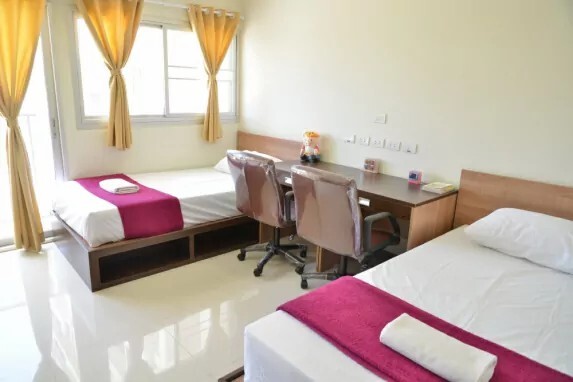
Choosing accommodation close to your university or public transportation can save both time and money.
How Much Does Food Cost?
Food is one area where Thailand can be very student-friendly.
You can find simple local meals for around THB 40–80, while meals at shopping malls, cafés and international restaurants can cost considerably more.
When I was studying, eating local food was one of the easiest ways to keep my everyday spending under control.
And you don't have to eat street food every day.
You can mix affordable local meals with cafés, restaurants and occasional treats.
The important thing is knowing where your money is going.
A simple monthly food budget
Budget: THB 4,000–5,000
Comfortable: THB 5,000–8,000
Frequent restaurants/cafés: THB 8,000+
.jpg?width=960&height=540&name=ae437a3148914db0966c8a1186efc2c2_Here_Are_Local_Dishes_Inspired_By_Summer_Rain_And_Winter_Of_Thailand_(1).jpg)
Local Thai food can be one of the easiest ways to keep your monthly budget under control.
Transportation in Thailand
If you're studying in Bangkok, public transportation can make student life much easier.
You can use:
- BTS Skytrain
- MRT
- Public buses
- Motorbike taxis
- Taxis
- Ride-hailing apps
If possible, choose accommodation that gives you an easy route to your university.
You may find that paying slightly more for a convenient location saves you money on transportation and, even more importantly, saves you time.
Bangkok or Another Thai City?
Bangkok isn't the only place where you can study.
| City | What It's Like | Relative Cost |
| Bangkok | Busy, international, excellent transport | ||| |
| Chiang Mai | Relaxed, popular with international students | || |
| Khon Kaen | University-focused, quieter | || |
| Pathum Thani | Close to Bangkok, more residential | || |
If your priority is a lower cost of living, it can be worth looking at universities outside central Bangkok.
On the other hand, if you want easy access to international companies, shopping, events and a large international community, Bangkok has obvious advantages.
Don't Forget the Expenses You Don't See on the Tuition Page
When planning your budget, remember the smaller expenses too.
You may need money for:
- University application fees
- Registration
- Visa-related expenses
- Insurance
- Books
- Laptop or equipment
- SIM card
- Internet
- Electricity and water
- Transportation
- Flights home
- Personal shopping
- Entertainment
- Emergency expenses
These may not all happen every month, but they can make a big difference to your overall budget.
A Realistic Monthly Student Budget
Here's a simple way to think about it:
| Lifestyle | Approx. Monthly Budget |
| Budget student | THB 12,000–18,000 |
| Comfortable student | THB 18,000–25,000 |
| Higher-spending lifestyle | THB 25,000–35,000+ |
What does a THB 20,000 budget look like?
| Expense | Example |
| Accommodation | THB 8,000 |
| Food | THB 5,500 |
| Transportation | THB 1,500 |
| Phone & Internet | THB 700 |
| Personal/Entertainment | THB 2,300 |
| Emergency/Savings | THB 2,000 |
| Total | THB 20,000 |
This is only an example, but it gives you an idea of how you could divide your money.
How Can Students Save Money?
You don't have to live an extremely strict lifestyle to save money.
1. Choose your accommodation carefully
Look at rent plus transportation and utilities.
2. Use public transportation
BTS, MRT and buses can be much cheaper than relying on taxis every day.
3. Eat local food
Thailand has plenty of affordable food options, so take advantage of them.
4. Look for student discounts
Ask whether universities, cinemas, restaurants or other services offer student rates.
5. Look for scholarships
Even a partial tuition reduction can make a significant difference to your total study cost.
How Much Money Should You Prepare?
Let's imagine your tuition is THB 200,000 per year and your living expenses average THB 20,000 per month.
Your basic annual calculation would be:
Tuition: THB 200,000
Living expenses: THB 240,000
Estimated total: THB 440,000 per year
And remember, this doesn't necessarily include flights, visa-related expenses, insurance or unexpected costs.
That's why I recommend preparing a little more than your basic calculation.
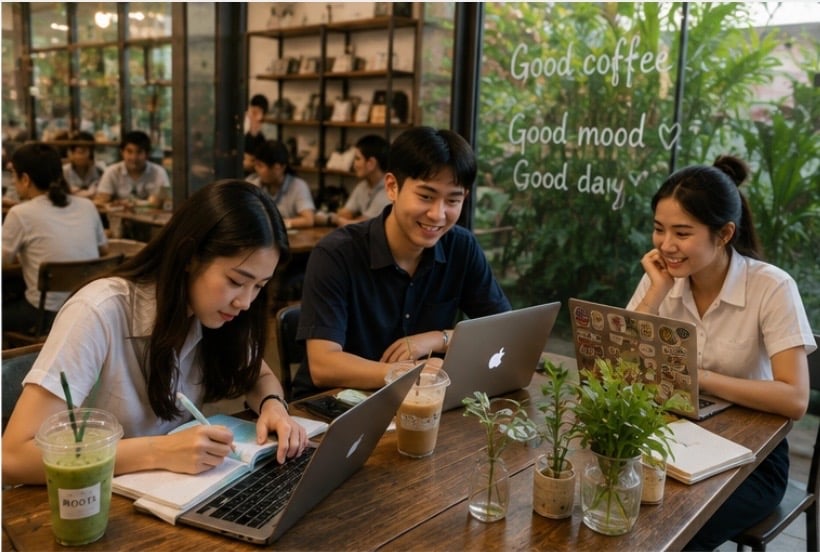
Studying abroad isn't only about the classroom — it's also about experiencing life in a new country.
My Advice Before You Come to Thailand
If you're planning to study in Thailand for the first time, my biggest advice is:
Don't create your budget based on the cheapest possible scenario.
Create a budget that you can actually live with.
You will probably want to go out with friends, explore Bangkok, try different food, travel around Thailand and enjoy your student life. That's completely normal.
At the same time, you don't need to spend a huge amount of money to have a good experience here.
For me, the biggest lesson from studying in Thailand was that small choices add up.
The apartment you choose, where you eat and how you travel can have a bigger effect on your monthly spending than you might expect.
Final Thoughts
Thailand can be a great choice for students who want an international education while keeping their overall costs more manageable.
But don't choose a university based on tuition alone.
Think about the complete picture:
Tuition + Accommodation + Food + Transportation + Lifestyle = Your Real Study Budget
As someone who completed a Master's degree at a public university in Thailand, I know that studying here can be both academically rewarding and a great life experience.
The key is simply to plan before you arrive.
If you know what you can realistically afford, choosing the right university, city and accommodation becomes much easier.
Planning to Study in Thailand?
Not sure which university or program fits your budget?
Scholor Bridge shares practical guides about studying in Thailand, from university choices and tuition fees to student life and application tips.
About the Author
Ms. Aurora is an education and marketing professional based in Thailand. She completed her Master's degree at a public university in Thailand and has experience helping students understand international study options.
Through Scholor Bridge, she shares practical information about studying in Thailand from a student's and education professional's perspective.